CHEMICAL PLANT SERVICES

Galiakotwala Engineering has been an expert in Sulphuric Acid for more than 38+ years studying issues and finding unique solutions for Acid Plants across the world.

Technical Audit & Services

We provide the following services for Sulphuric Acid Plants:

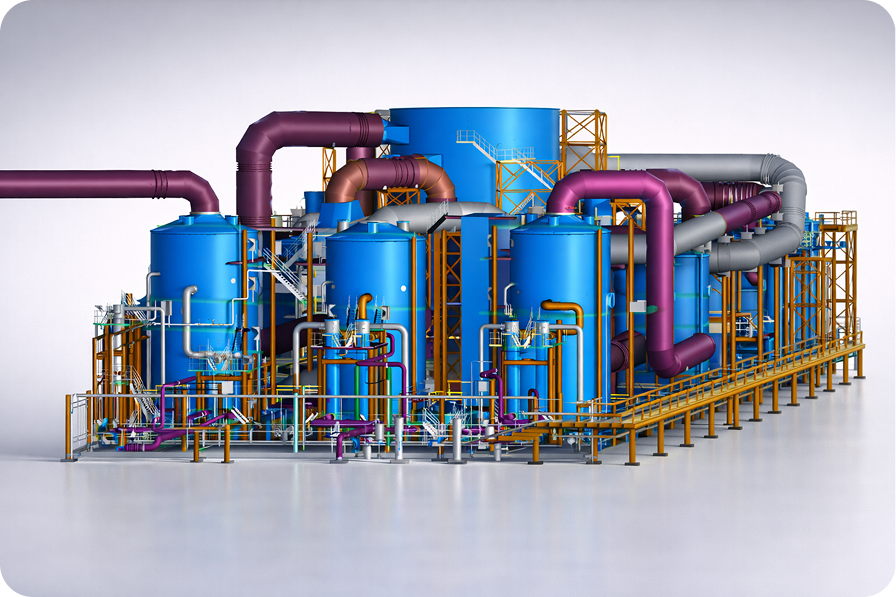
3000TPD Sulphuric Acid Plant Stimulation Model*

*Illustrations are for representation purposes only.

Consultancy Services

Our plant and energy audit services help sulphuric acid plants improve performance, increase capacity, reduce operating costs, enhance reliability and become more energy efficient through systematic engineering evaluation.

Our specialization is maximizing production value in sulphuric acid plants and we can help you achieve:

Advantages of a Plant Audit

Advanced Equipment

  • Use of specialized Alloy to significantly enhance life of equipment
  • Complete Stainless Steel Converters
  • DCS based instrumentation

Reliability

  • Higher on-stream availability due to improved equipment selection
  • Less down-time due to reduction in material handling equipment
  • Elimination of problems associated with conventional Acid Dilution systems
  • Improved material selection, resulting in lower corrosion

Advantages of an Energy Audit

Energy

  • Hot water generation
  • High steam generation and export
  • Low power consumption
  • Various options to recover by-product

Low Emissions

  • SO2 emissions within 0.5Kg/MT, if required
  • SO3 emissions within 50ms/mm³ in all plants
  • Full conversion within 2 hours of start up from cold

Technical Services

We provide the following on site services for Sulphuric Acid Plants:

When Does Your Heat Exchanger Need Cleaning?

On-site Heat Exchanger Cleaning 1

On-site Heat Exchanger Cleaning*

*Illustrations are for representation purposes only.

Heat exchangers in sulphuric acid plants are prone to fouling, scaling, and deposits over time due to process conditions. These deposits restrict flow, reduce heat transfer efficiency, and increase energy consumption, resulting in lower plant performance. Timely inspection and professional tube cleaning restore heat transfer efficiency, reduces pressure drop, improve reliability, and help maintain consistent production while extending equipment life and reducing operating costs.

  • Has the heat transfer efficiency of your heat exchanger declined over time?
  • Have you observed a significant reduction in heat exchange rates affecting overall process efficiency?
  • Is there an increased pressure drop across the heat exchanger tubes?
  • Are circulation pumps or associated systems consuming more energy than normal?
  • Is your plant unable to achieve its target production capacity due to reduced heat exchanger performance?
Advantages of Tube Cleaning for Heat Exchangers

  • Extending the lifetime of the Heat Exchanger equipment
  • Reduction of electric energy consumption
  • Saving of water in cooling towers
  • Un-interrupted production

Mist Testing Services

Sulphuric Acid Mist Measurement Method

We measure sulphuric acid mist in accordance with the stipulations of US EPA Method 8 to ensure accurate and reliable results. Gas samples of known volume are collected from designated locations such as the Drying Tower (DT), Intermediate Absorption Tower (IPAT), and Final Absorption Tower (FAT). These samples are then analyzed under controlled laboratory conditions to determine the concentration of sulphuric acid mist and sulphur trioxide, enabling accurate assessment of mist eliminator performance and plant operating efficiency.

Advantages of Measuring Sulphuric Acid Mist:

  • To measure the performance of Mist Eliminators.
  • To avoid damage to downstream equipment from Acid Mist.

Moisture Testing Services

Drying Tower Moisture Measurement

In the Drying Tower, Sulphuric Acid is used to remove moisture from the air. In this process, there is a possibility of moisture slippage due to a number of factors, so measurement of Moisture at the Drying Tower outlet becomes necessary.

Advantages of Measurement of Moisture at the Drying Tower Outlet:

  • To ensure the performance of the Drying Tower and internals.
  • To avoid damage to catalyst and downstream equipment from Moisture present in the Outlet Gas from the Drying Tower.

What Our Customers Say

image 199
image 200
image 200
image 200
image 192
image 197
Frame 1000003858 (1)
Please enter official email address only
or Attach a document Attach
0/100 words